
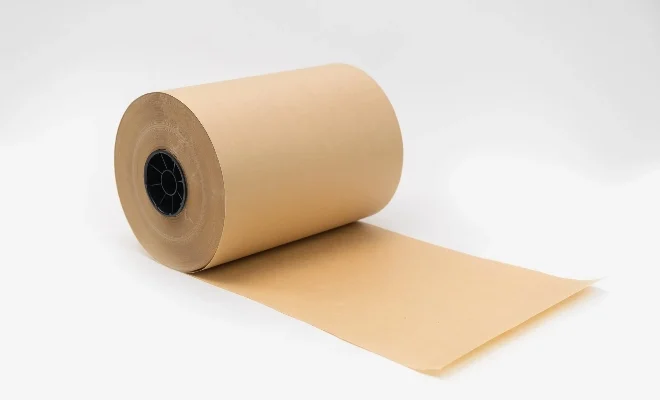
Kraft paper is one of the most widely used and trusted packaging materials in the world. It comes from a German word ‘strong’. Kraft is durable and tear-resistant; it is tougher and more durable than regular paper.
Its natural brown color gives it a rustic, eco-friendly look, but it can also be bleached or dyed for different uses. Because it is strong, recyclable, and affordable, kraft paper is commonly used for packaging, wrapping, shopping bags, and even crafts.
In this blog, you will learn about how kraft paper is made, how it is different from regular paper, its types, and more.
How is Kraft Paper Made?
Kraft paper is made through the kraft process, where wood chips are turned into strong paper pulp. In this process, the wood chips are cooked with a mix of chemicals like sodium hydroxide and sodium sulfide.
This removes lignin, the substance that makes wood stiff, while keeping the cellulose fibers strong. The pulp is then washed, pressed, and dried into large sheets of kraft paper. The paper can stay natural brown, be bleached for a white finish, or be coated for extra strength.
Kraft Paper vs Regular Paper
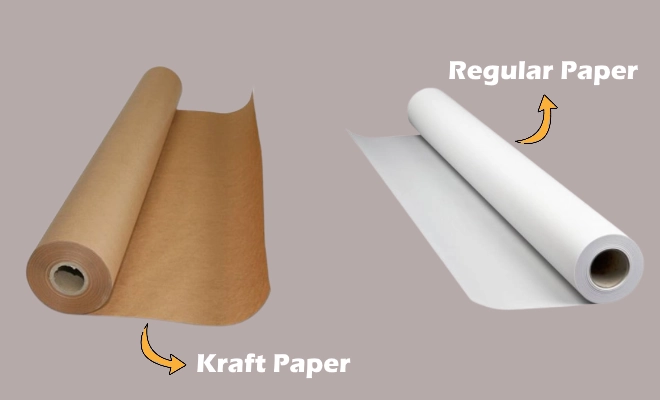
Here’s the main difference between kraft paper and regular paper.
- Strength: Kraft paper is stronger and more durable than regular paper.
- Material: Made from long wood fibers, whereas regular paper uses shorter fibers.
- Color: Natural brown (can be bleached); on the other hand, regular paper is usually white.
- Uses: Kraft paper is used for packaging and wrapping; regular paper is used for writing and printing.
How is Kraft Paper used in Packaging?
Kraft paper is widely used in the packaging industry due to its strength and eco-friendliness. Here’s how it is used in packaging:
- Wrapping paper: Protects products from scratches and dust.
- Paper bags: Common in retail stores, grocery shops, and food outlets.
- Box liners: Add extra strength and protection inside shipping boxes.
- Void fill & cushioning: Crumpled kraft paper is used to fill empty spaces in parcels.
- Product sleeves & wraps: Wraps around soaps, candles, or baked goods for a natural look.
- Custom printed packaging: Logos, designs, and branding are easily printed on kraft paper.
- Envelopes & mailers: Lightweight but sturdy for documents and small items.
Types of Kraft Paper
Below are a few types of kraft paper. Let’s discuss them one by one:
Coated Unbleached Kraft (CUK)
It is one of the most basic types of kraft. There is no bleaching or addition of any chemicals in this type. It is also known as solid unbleached sulfate, as it consists of 80% virgin fibre wood pulp. It is tear-resistant and stiff without being too thick. It is actually one of the thinnest kraft packaging.
Solid Bleached Kraft Paper (SBS)
This type of kraft is considered a great choice for packaging luxury and high-end items. It has a smoother surface that allows high-quality printing for a premium look and feel.
Coated Recycled Board (CRB)
CRB is 100% recycled kraft paper as it is not made from virgin fibre. It has a smooth surface for printing. It is commonly used in packaging for cereal boxes, food cartons, and other lightweight retail products.
Benefits of Kraft Paper
- Strong and durable: Provides excellent tear resistance and protection.
- Eco-friendly: 100% recyclable, biodegradable, and made from natural materials.
- Cost-effective: Affordable compared to many other packaging materials.
- Versatile: Suitable for wrapping, filling, bags, boxes, sleeves, and liners.
- Lightweight: Easy to handle and reduces overall shipping weight.
- Customizable: Can be printed, coloured, or cut into different shapes for branding.
Customisation Options for Kraft Paper
Kraft paper offers many customization options to fit different packaging needs. It can be printed with logos, patterns, or product details for branding. Finishes like matte, glossy, or textured coatings can also be added.
Businesses can also choose from various thicknesses, colours, and styles. Die-cut shapes and window cutouts add a unique touch to the packaging.
The Environmental Impact of Kraft Paper
Kraft paper has a low environmental impact compared to many other packaging materials. It is recyclable, biodegradable, and often made from renewable wood pulp. This means it breaks down naturally without harming the environment.
Since it can be reused and recycled multiple times, it also helps reduce waste in landfills. Many businesses choose kraft paper because it supports eco-friendly packaging and lowers the use of plastics.
Conclusion
Kraft paper is a strong, versatile, and eco-friendly material that plays a major role in the packaging industry. Its durability, recyclability, and wide customization options make it a practical choice for both businesses and customers. By choosing kraft paper, brands not only protect their products but also contribute to a greener and more sustainable future.
