
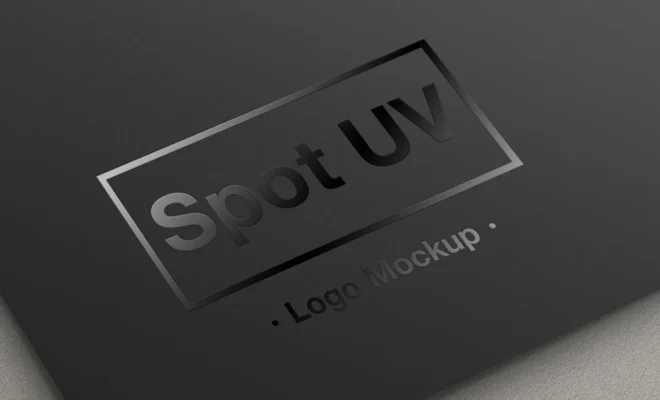
Spot UV printing is a special finishing method where a glossy coating is applied only to specific areas of a design. This creates a shiny contrast against the rest of the surface, which is usually left matte.
It is popular in the print and design industries because it makes products look more professional, modern, and eye-catching. The glossy highlights draw attention to important details like logos, text, or patterns.
You’ll often see Spot UV used on business cards, brochures, invitations, and product packaging. As the brands want to add a premium touch without covering the entire surface in gloss.
Understanding Spot UV Printing?
Spot UV printing is a finishing method that uses ultraviolet (UV) light to cure a shiny coating applied to printed materials.
The term “spot” means the coating is applied only to selected areas, rather than the entire surface. This highlights specific parts of a design, such as a logo, name, or graphic.
Spot UV creates a glossy, high-shine effect, and it can also add a slight raised texture, giving a professional look and a tactile feel.
How Spot UV Printing Works
Spot UV printing is done through a simple but precise process that highlights selected areas of a design.
Step-by-Step Process:
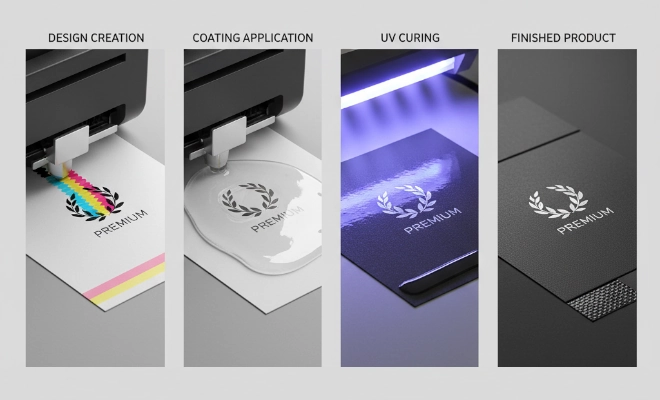
- Printing the base layer: The design is first printed on the chosen material, such as paper, cardstock, or packaging.
- Applying the UV coating: A glossy liquid coating is applied only to specific areas where you want to add shine.
- Curing with UV light: Ultraviolet (UV) light is then used to dry and harden the coating instantly.
- Types of coatings: Different UV coatings can be used, such as high-gloss for shine, matte for contrast, or textured finishes for a tactile effect.
Design Considerations
When using Spot UV printing, it’s important to keep a few design factors in mind:
- Best use cases: Spot UV works well for highlighting logos, patterns, or key text elements, adding focus and style.
- Matte vs. gloss contrast: The glossy UV coating works best when paired with a matte background.
- Precise alignment (registration): Accurate alignment is crucial to ensure the UV coating matches the printed design.
- File preparation tips: Always use vector layers to mark the areas where Spot UV should be applied for clear results.
- Paper choice: Spot UV is not recommended for uncoated or highly textured papers, as the effect may not appear clean.
Applications of Spot UV Printing
Spot UV printing is used in many products to create a striking and high-quality finish.
- Business cards: These often use Spot UV to highlight names, logos, or key details, giving them a polished and memorable look.
- Brochures and flyers: These benefit from Spot UV when certain images, text, or patterns are emphasized, making the design more engaging.
- Invitations and greeting cards: They use Spot UV to add shine and texture, creating an elegant feel for special occasions.
- Luxury packaging and labels: They commonly feature Spot UV accents to enhance branding and make products look more premium.
- Book covers: Spot UV is applied to titles, images, or designs, helping them add a glossy and tactile effect.
Spot UV vs. Other Finishing Techniques
Here’s how Spot UV compares to other finishing techniques:
Spot UV vs. Full UV coating
Full UV coating adds gloss to the entire surface, while Spot UV highlights only selected areas for contrast and emphasis.
Spot UV vs. Foil Stamping
Foil stamping adds metallic or colored foil using heat and pressure, while Spot UV creates a glossy, transparent effect without metallic shine.
Spot UV vs. Embossing/Debossing
Embossing and debossing create raised or recessed textures, whereas Spot UV focuses on adding shine and smoothness without changing the paper’s depth.
Key Points to Consider for Spot UV Packaging
- Material Used: Spot UV works best on coated, semi-coated, or smooth papers; uncoated or highly textured paper may show uneven results.
- Design simplicity: Using too many small spot areas can look messy. Focus on logos, key text, or select graphics for the best effect.
- Contrast: The gloss of Spot UV stands out most against a matte background, so choose finishes that create a strong contrast.
- Thickness of layers: The thickness of paper stock and printed layers can impact how well Spot UV adheres and cures.
- Coating type: The coating type (gloss, matte, satin, textured) matters depending on the look and durability you want.
- Cost and time: Spot UV adds to production cost and may require additional setup time for printing and packaging.
- Wear and handling: Consider how the package will be handled; heavily handled edges may show scratching or peeling of the Spot UV coating.
Conclusion
Spot UV printing is a reliable way to add shine, texture, and detail to designs without overdoing it. It helps highlight important elements like logos, text, or patterns, making packaging and printed materials feel more professional and high-end. For brands that want to add a premium touch to their packaging, Spot UV offers a balance of style and durability.
